We spend a lot of time figuring out how to bring the real world into virtual spaces. And for good reason—VR can make the impossible possible, allowing us to train for dangerous situations, experience far-off places, or test ideas in simulated environments.
But what if we flipped the perspective? Instead of asking how we can bring reality into XR, we should ask: What can XR teach us about reality?
Beyond “Just Reality”
A rookie mistake in VR design? Simply modelling digital worlds after the physical one. The real magic of immersive technology lies in its ability to create hyperreality—experiences that feel more intense, engaging, and sometimes even more real than reality itself.
Think about it: VR is unbound by the rules of physics, economics, or logistics. Anything is possible. A space can be infinitely large or intimately small, time can be stretched or compressed, and objects can behave in ways that defy logic. And yet, our brains believe.
This is where XR’s true power lies—not in replicating reality but in reimagining it.
A Taste of Presence (Or, That Time XR Made People Demand Ice Cream)
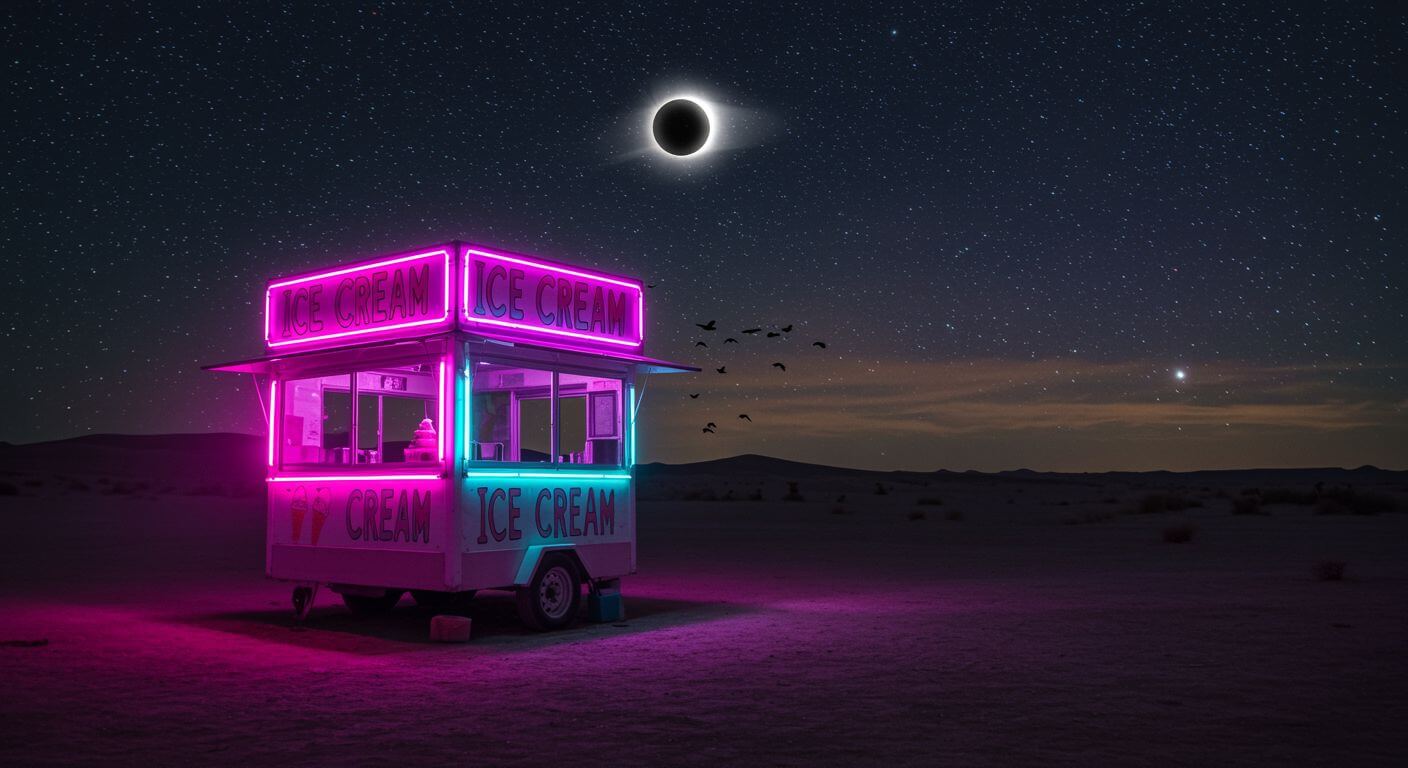
Take a project we recently worked on: a VR film about an artisan ice cream company. The goal wasn’t just to tell a story but to evoke presence, embodiment, and empathy—to make viewers feel like they were inside the world of these entrepreneurs.
We became obsessed with how we shot the food hero moments. Could we make the audience not just see the ice cream but taste it? Could we create an experience so immersive that their cravings became real?
Turns out, we could.
The first group to experience the VR film emerged militantly demanding ice cream—as if their very survival depended on it (and ours!). And in that moment, it hit us: XR doesn’t just tell stories. It triggers desires. It creates embodied experiences that linger long after the headset comes off.
Joy, Love, and Learning (at a Business School?!)
Business schools aren’t exactly known for joy, love, and fun. And yet, research shows that emotionally engaging, immersive learning leads to better retention and deeper understanding.
- A study in Frontiers in Education found that VR-based learning significantly increases engagement and motivation. Immersive tech bridges the gap between theory and practice by placing learners inside real-world scenarios.
- Business schools like UNSW Sydney are using VR to simulate the experience of marginalised groups, helping students build empathy and make better decisions.
In short: The more we feel, the more we learn.
Interconnected Realities & New Expressions
360-degree storytelling and immersive spaces offer dizzying creative possibilities. But here’s the real question: How do we bring that sensibility back into the physical world?
If XR can help us think beyond interfaces, beyond fixed identities, beyond traditional learning structures—what else can it unlock?
Thinking Beyond the Interface
What if we could externalise the internal?
Imagine navigating someone’s imagination in real time—no screen, no controller. Technologies like brain-computer interfaces, generative AI, and biometric sensors are nudging us closer to a world where thoughts could be directly translated into immersive experiences.
Mind-bending? Absolutely. Also a little terrifying.
Why This Matters
For me, immersive tech isn’t just about utility. It’s about the extraordinary intersection of human expression and machines. It’s about pushing past what’s possible today to reimagine how we learn, create, and connect.
So here’s a thought: “What if XR isn’t just shaping the future of technology, but the future of human imagination itself?”